
GeoGuessr
Helping players explore, express themselves, and improve
Helping players explore, express themselves, and improve
- Design player experiences across gameplay (World, Classic, Daily Challenge) and beyond gameplay (shop, progression, clubs, and more)
- Help the team explore and refine ideas through AI-assisted working prototypes
- Build a shared design system that connects design and code and supports collaboration with engineering
Overview
As a Senior Product Designer at GeoGuessr, I work with the team to help players discover new ways to play, express themselves, and improve. Working closely with product and engineering, I’ve helped make AI a major part of our design process, exploring ideas by building and iterating on working prototypes. My work spans multiple initiatives, including player progression, clubs, analytics, and the Daily Challenge.
A shared foundation for design and code
When I joined, the other designers worked mainly in Figma. I was already building working prototypes, and with my coding background, I helped the team bring that approach into our design process. We built a shared design system with tokens and components on Tailwind CSS, all in one monorepo, so we could try things out while keeping the experience consistent.
Using the same React and Next.js stack as the product meant we could reuse real components, including 3D avatars and maps. With AI helping us build and iterate, we could explore how an experience actually felt, beyond what we could show in Figma. The prototypes gave us room to experiment, while engineering handled production security, reliability, and scale during implementation.
Those prototypes also made it easier to work with developers and their coding agents. We could share something that already behaved the way we intended, with less to translate from design into code. As a team, we estimated time savings of 40–60% compared with our previous workflow, with better output quality and results that stayed closer to the prototypes.
A homepage that adapts to the player
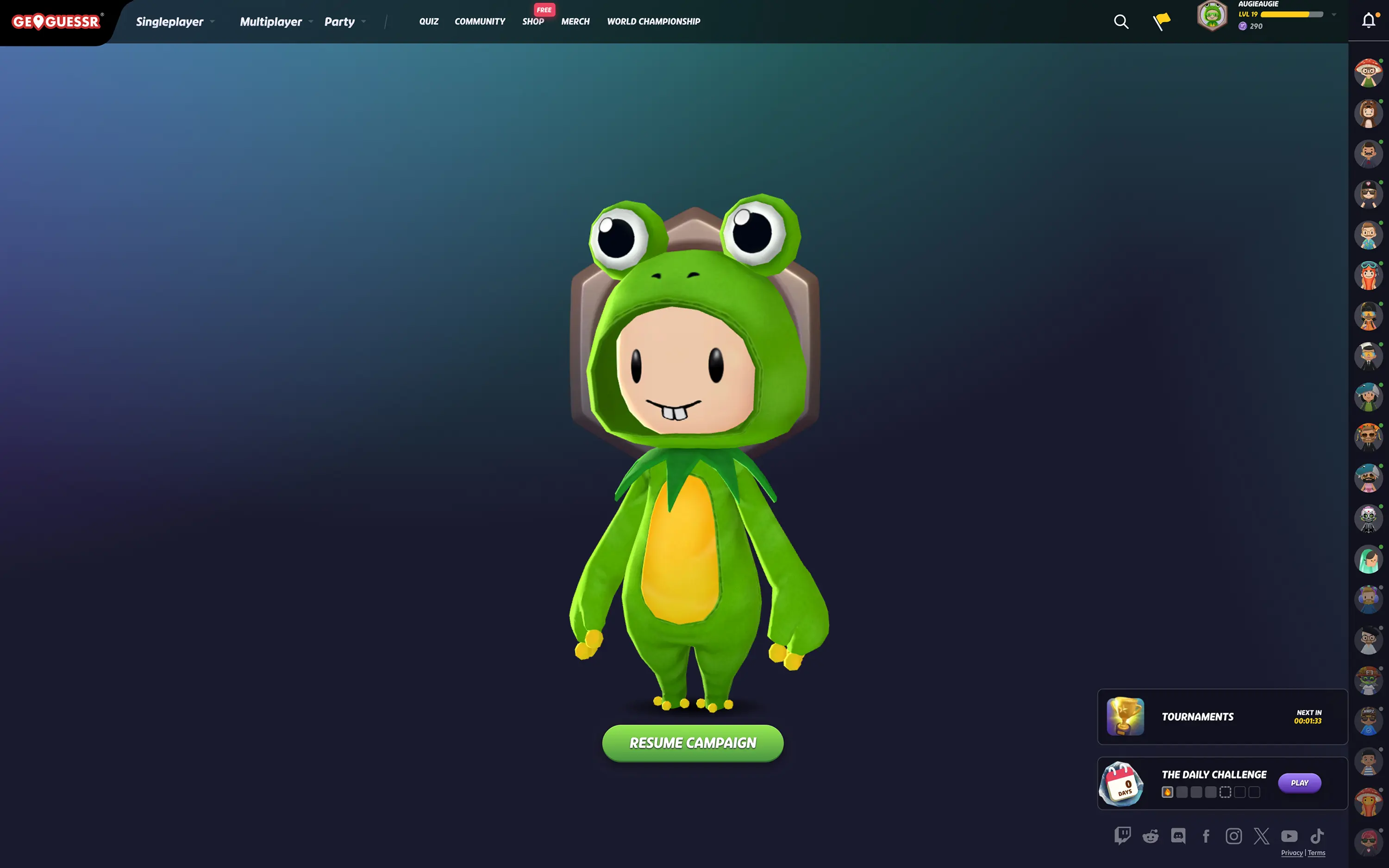
We started by introducing a moving, starry background as a main visual element that follows players through the menus. The idea was simple: while playing, you’re somewhere on Earth; between games, you’re in space, ready to jump anywhere. We then turned a static homepage into a dashboard that adapts to the player. Favorite game modes, rankings, daily missions, and tournaments come together through personalized widgets. We also added responsive avatars and small moments of motion to make the homepage feel more alive.
One space to shop and customize
Buying items and equipping them used to happen on separate screens. We brought both into one place, so players can browse, preview an outfit, and equip it without jumping back and forth. Clearer categories make it easier to find things, while motion, sound, and companion dogs bring a little more personality to the experience.
Making leveling up feel rewarding
XP was easy to earn but hard to feel. You’d see the numbers go up, but your progress stayed in the background. We reimagined player progression with consistent XP animations everywhere you play and a Level-Up screen that celebrates your progress and shows where your XP came from. We also introduced the Explorer’s Path, a clear, generous track of levels and rewards that makes every milestone feel meaningful.
A home for the club
We brought weekly missions, stats, and friendly competition together in a redesigned club home. The idea was to give players a clearer view of what’s happening in their club and a shared space to work toward goals together.
More room for friendly competition
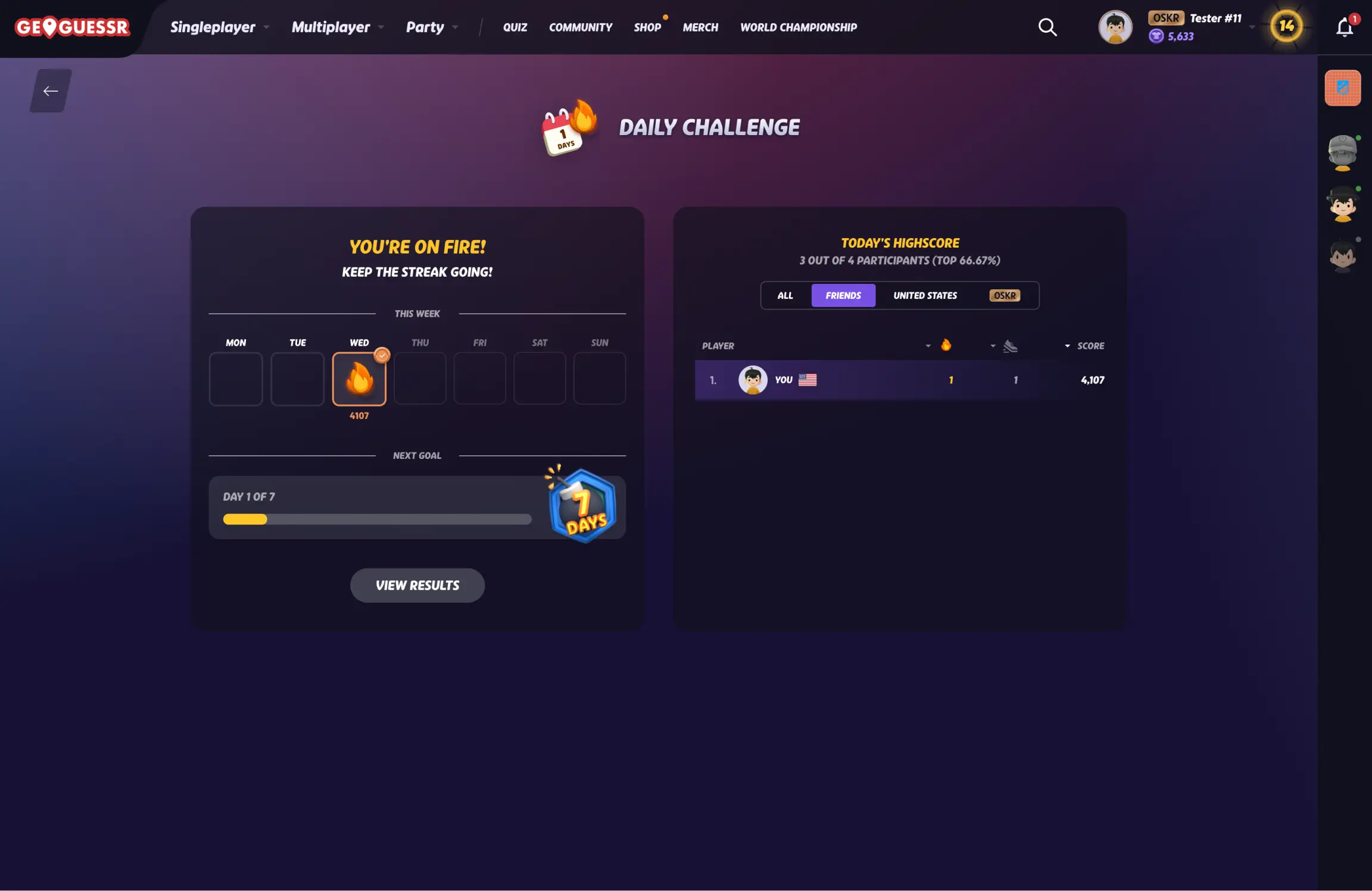
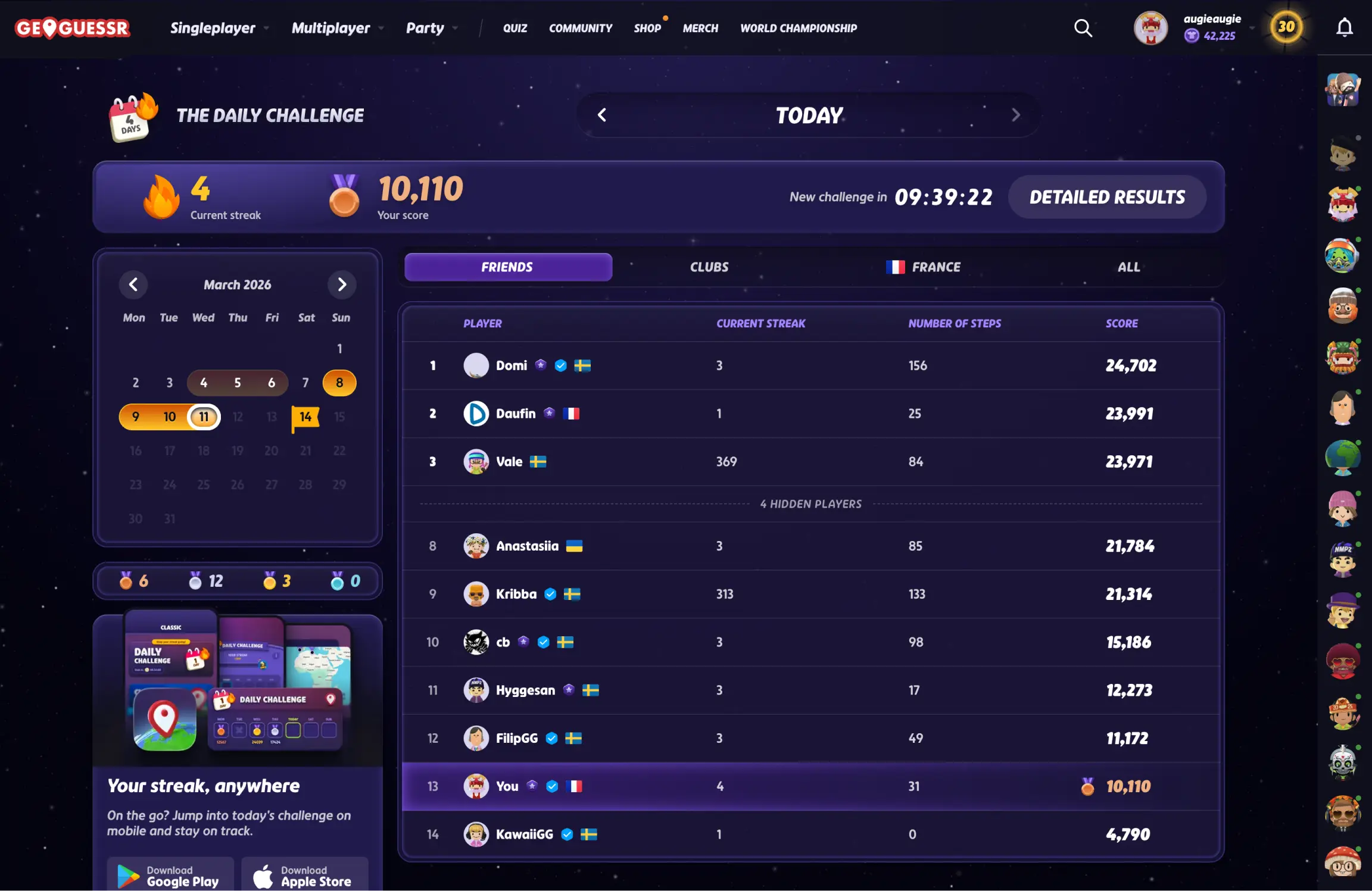
We redesigned the Daily Challenge experience, with particular attention to the lobby after players finish their game. The previous layout gave little room to the leaderboard, even though comparing scores with friends and club members is a big part of the experience. We made it the focus of the page, giving players more space to see how they rank while keeping their score and streak easy to find. Players can also revisit past challenges and see their previous scores. The redesign was well received by players.
From gameplay data to focused practice
With GeoGuessr Analytics, we wanted to help players understand where they do well and where they struggle. We brought together country and region insights, an interactive globe, and the locations they often mix up. From there, players can create custom practice maps and work on the areas they want to improve.
Learn from every match
We brought the match summary, replay, and AI-powered location analysis together in Match Review. After a Duel, players can revisit a panorama and use AI to spot clues they may have missed, from road signs and infrastructure to details in the landscape. We wanted to make it easier to understand a guess and take something useful into the next game.
Reflection
Looking back, one of the most interesting parts has been figuring out, as a team, how AI can fit into the way we design. We started exploring AI prototyping early, and it changed how we turn ideas into working experiences and collaborate with engineering. The pace is exciting, but also a little worrying. There’s so much we can do now, and plenty of questions about how our role as designers will evolve. Being part of that shift has made this work particularly meaningful to me.