Weed Lands
Combining virtual farming with crypto mining
Combining virtual farming with crypto mining
- Led product and brand design on a four-person team
- Created a playful visual identity for a game built around cannabis cultivation
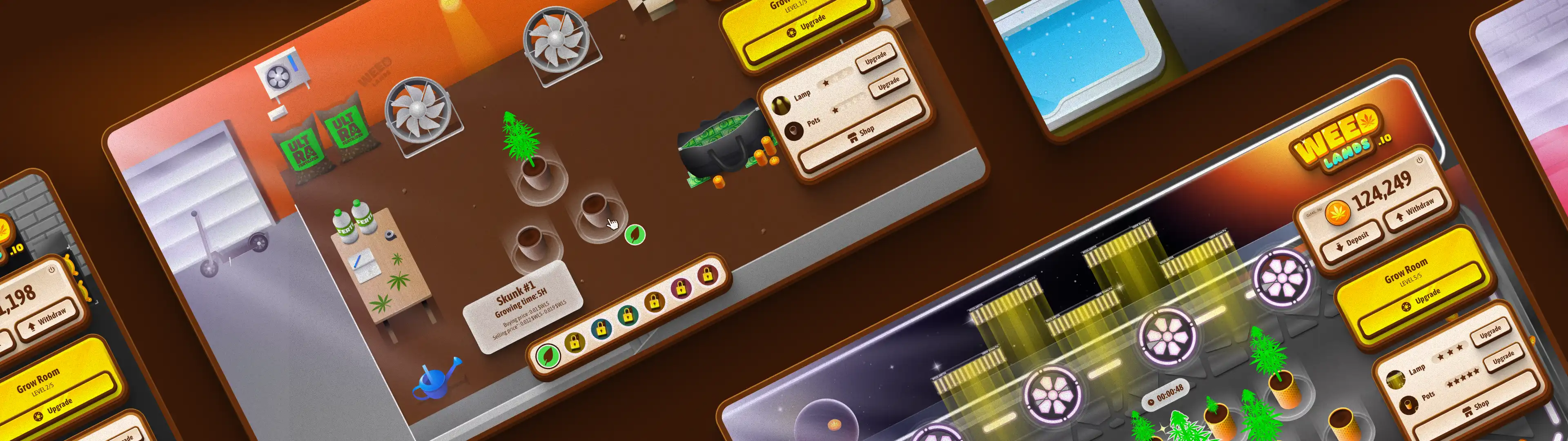
- Designed interfaces and game assets for five environments, from a basement to a spaceship
Overview
Weed Lands was a web game that combined crypto mining with virtual farming: players grew cannabis crops that contributed to cryptocurrency mining. As lead product and brand designer on a four-person team, I owned the product design and the brand from the ground up.
Problem
Crypto projects at the time leaned on dark, technical visuals. We wanted Weed Lands to read as a game, so we chose an approachable, almost whimsical look instead of the usual gritty cannabis aesthetic. That decision shaped the color palette, animation, and UI from the start.

Approach
Gameplay used a top-down, pseudo-3D style. Players progressed through five cultivation environments, from a basement setup to a spaceship farm, upgrading equipment and choosing strains along the way.
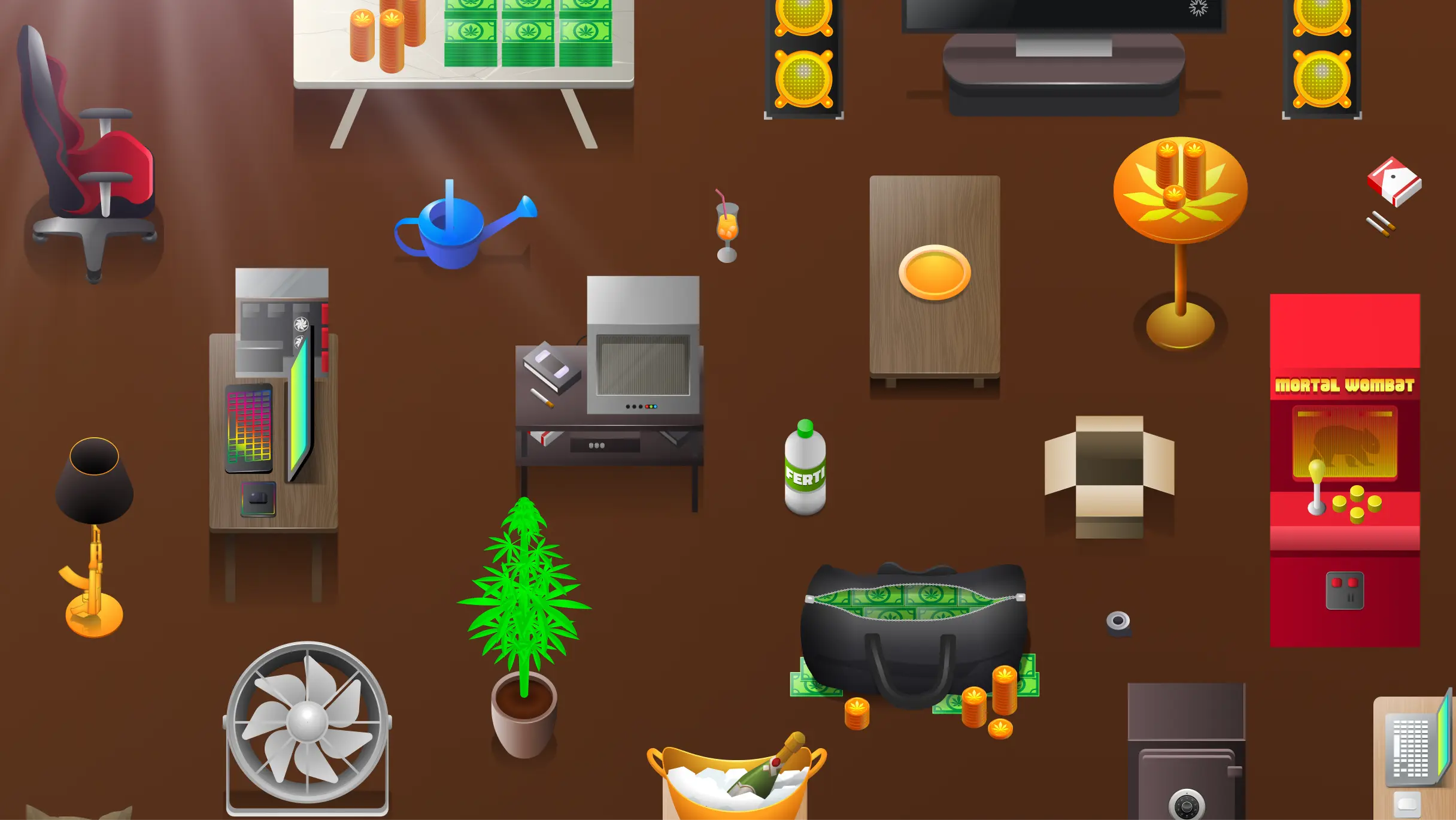
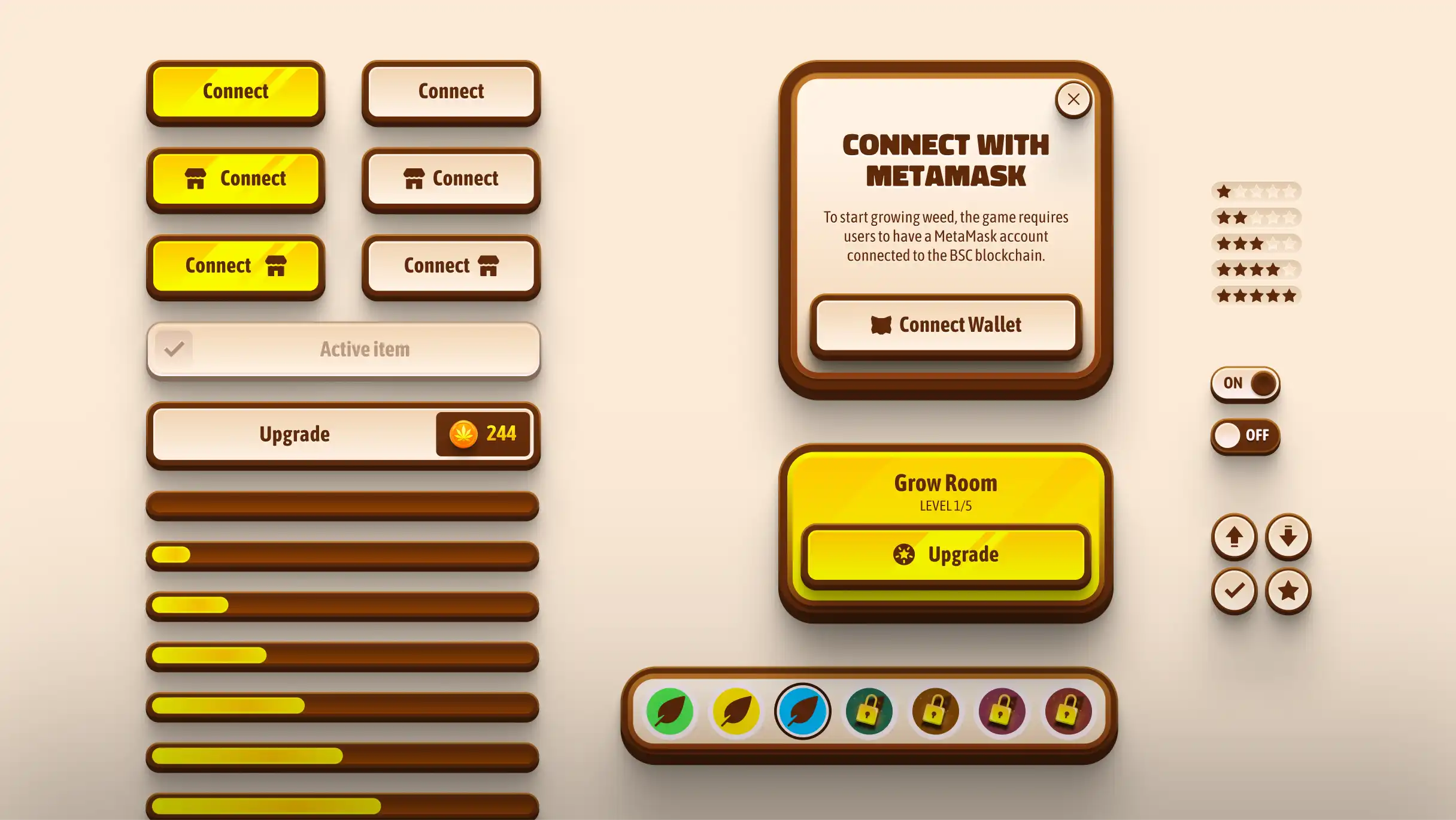
The interface stayed simple: managing crops, upgrading farms, and collecting rewards took only a few taps, with animations borrowed from mobile game conventions to make each action feel worth doing.
Outcome
Weed Lands picked up attention in the crypto community ahead of launch, and traffic on release day required scaling up server capacity quickly. But the cryptocurrency mining mechanic turned out harder to sustain than expected. As the in-game currency's value fluctuated, we made the call to shut the service down.
Reflection
Weed Lands taught me to question the business model as closely as the interface. The game attracted players, but its mining economy proved difficult to sustain.